


Starting at just $25
Custom Body Pillow Case From Your Photo
Cover only, fits your existing 150 x 50 insert. Free preview before you pay. From $25.
Size
Color
Upload a photo and the preview comes back free. Nothing is charged until you approve the design.
- Free instant preview
- 3 Days production time
- Both Sides printed as standard
- No Minimum order just one
Why a Cover Only Makes Sense
You already own a body pillow. The insert is fine. It is the cover you are tired of looking at.
That is the entire reason custom body pillow cases exist.
A cover costs less than a full set, ships lighter, and slides onto the insert you already have. You get a completely new pillow for the price of a printed piece of fabric.
It is also the smart way to own more than one design. Buy the insert once, then swap covers whenever you feel like it. A photo of your partner this month, your dog next month, your own artwork after that. Same pillow, different personality.
At Hugabu you upload a photo, see a free preview of exactly how it will print, and order only if you like what you see. No design software. No minimum order. No paying first and finding out later.
Covers start at $25 and ship in days.
One thing to check first. Our covers are cut for the standard 150 x 50 cm insert, which is what most body pillows sold in the last decade use. There is a sizing section further down if you are not sure what you have.
The rest of this page covers what you actually need to decide before ordering: whether your insert will fit, which fabric to choose, what photos print well, and how to wash it without wrecking the print.

What Is a Custom Body Pillow Case?
A custom body pillow case is the printed cover that goes over a body pillow insert. You will also see it sold as a custom body pillow cover, a pillowcase, or by the Japanese name dakimakura cover.
It is fabric, not stuffing. That distinction matters more than people expect, so it is worth being clear about it.
What you get
A single piece of printed fabric, sewn into a sleeve, with a zipper along one edge. You slide your existing insert in, close the zipper, and you are done. It takes about ten seconds.
What you do not get
The insert itself. If you do not already own one, order the full set instead. Nobody enjoys unwrapping a flat piece of fabric and realizing they cannot use it yet.
Why people buy covers separately
- They already own an insert and only want a new design
- They want two or three designs to rotate
- They are replacing a cover that faded, tore, or belongs to an ex
- They are buying a gift for someone who already owns a body pillow
- They want to keep shipping costs down, since fabric weighs almost nothing
How it is printed
Your image is printed directly onto the fabric using dye based inks, edge to edge, on both sides by default. There is no vinyl layer sitting on top and nothing to peel off. The color sits in the fibers, which is why it survives washing.
Standard sizing
Most custom body pillow cases, ours included, are cut for the 150 x 50 cm insert. That is the size the category standardized on years ago, which is why replacement covers are so easy to find. We print smaller and larger formats too, but if you are buying a cover to fit something you already own, check the measurements before ordering.
The one rule
You need to own the rights to whatever you print. Your photos, your artwork, art you commissioned: all fine. A screenshot from a show or a character someone else owns: not fine, and we will refuse it.
How to Order a Custom Cover
Upload Your Photo
Any photo from your camera roll.
Check the Preview
Free, before you pay a cent.
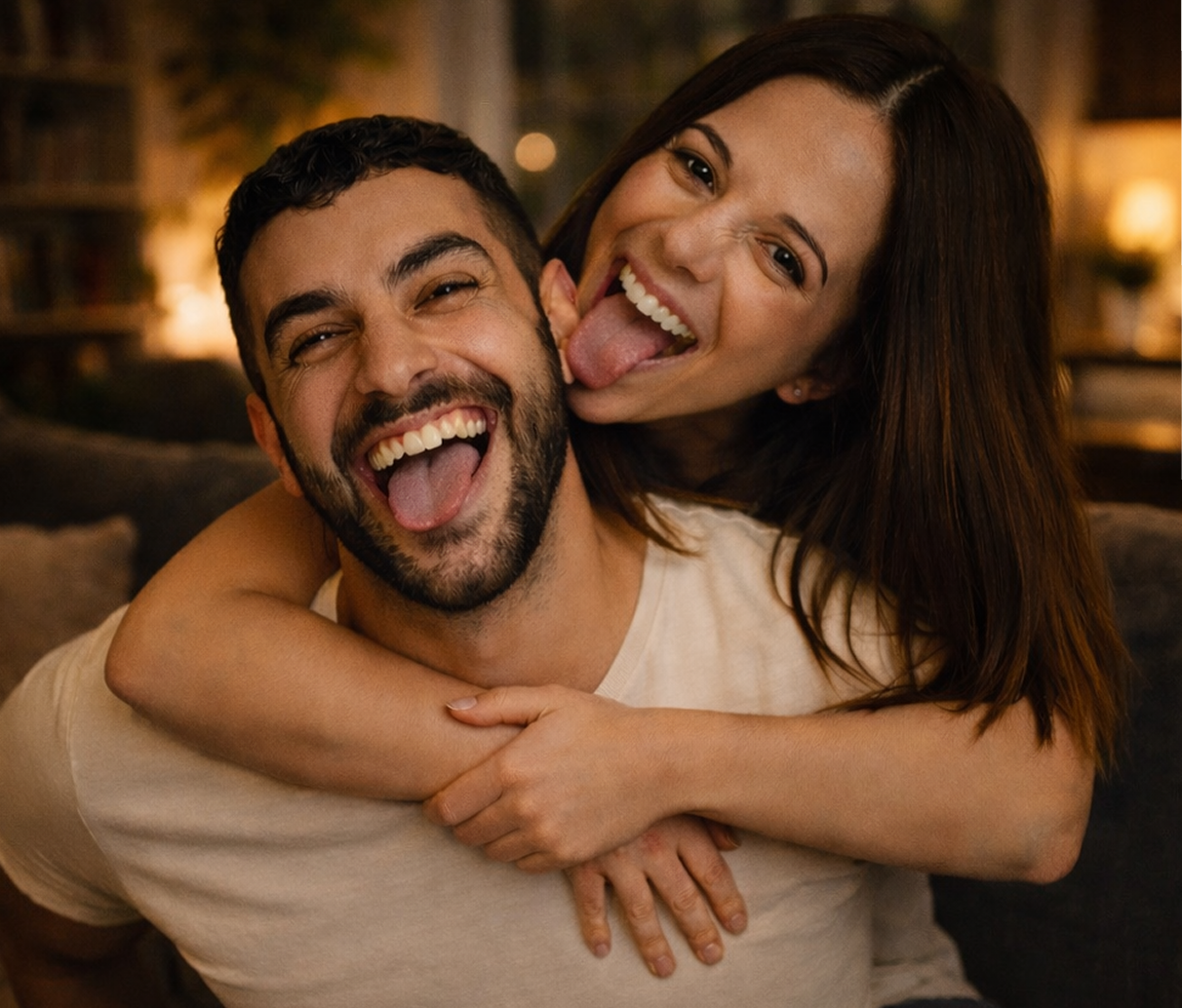

YOU HUG EM'
Special delivery, your hugabu is home.

Both Sides Printed, One Price
Every custom body pillow case we print is double sided by default. Not as an upgrade, not as a checkbox that adds twelve dollars at checkout. It is simply how the covers are made.
That gives you a second design for free, and most people use it.
Some flip the pillow depending on their mood. Some put a full body photo on one side and a close up on the other. Couples sometimes put one person on each side, which is either romantic or a source of arguments, depending on the couple.
You can also leave the back plain. A solid color that matches the front costs nothing extra and looks intentional rather than empty.
Whatever you choose, you approve both sides in the preview before you pay. What you see is what gets printed.

Which Fabric Should You Print On?
Fabric changes two things: how the cover feels against your skin, and how your image looks once it is printed. Both matter, and they pull in slightly different directions.
Peach skin
Soft, matte, breathable, and the most forgiving of the two. Colors print accurately without looking glossy, the surface hides small marks, and it feels closest to a normal pillowcase. This is what we ship most, and what we recommend unless you have a specific reason to choose otherwise.
2 way tricot
Smoother, slightly shiny, with a stretch in both directions. Colors look more saturated and details look sharper because the surface is tighter.
The tradeoffs are real though. It costs more, it picks up marks more easily, and the stretch means the print shifts slightly when the cover is pulled tight over a firm insert. Choose it when color intensity is the whole point, for example with bold artwork or anime style illustration.
Which one for photos
For a custom photo body pillow case, peach skin usually wins. Skin tones look natural rather than glossy, and photographs do not need the extra saturation that tricot adds.
Which one for artwork
For flat color illustration, tricot is worth the extra cost. Line work stays crisp and saturated colors stay saturated.
What does not change between them
- Both print double sided at no extra cost
- Both use the same dye based, colorfast inks
- Both come with an invisible zipper and double stitched seams
- Both are machine washable on a cold gentle cycle
- Both are fully opaque, so the insert never shows through the print
Still unsure
Order peach skin. It is the safe default, it costs less, and it is the option that generates the fewest complaints. You can always try tricot on your second cover.
Covers, Fabrics And Sizes
The hidden zipper, the two fabrics, and how 150 by 50 cm compares to a bed pillow.


Will It Fit Your Insert?
This is the question that decides whether ordering a cover instead of a full set was a good idea. Five minutes with a tape measure prevents the whole problem.
Measure the insert, not the old cover
Covers stretch and shrink over time. The insert is the honest number. Lay it flat, measure the long side and the short side, and write both down.
The standard
150 x 50 cm, which is roughly 59 x 20 inches. This is what the category standardized on, and it is what most body pillows sold in the last decade use. If your insert measures close to this, our standard cover will fit.
Close is fine
A centimeter or two either way is not a problem. Covers are cut with a small allowance, and a slightly loose cover looks better than a stretched one. If your insert is 148 or 152 cm long, order the standard.
When it is not fine
- Anything under 140 cm is a different size class, usually a kids or desk pillow
- Anything over 165 cm needs a larger cut
- Rectangular inserts with squared corners sit differently from rounded ones and can look boxy
Other common sizes
Some inserts sold in the US come in 20 x 54 inches rather than the 150 cm standard. That is shorter than a standard dakimakura cover, so the cover will be loose at one end. It still works, it just does not sit tight.
What about the zipper end
The zipper runs along one long edge rather than the short end, which makes the insert much easier to push in. It also means a slightly oversized insert still goes in without a fight.
If you are not sure, send us the measurements before ordering. We would rather answer a message than reprint a cover. And if you have no insert at all, order the full set instead, because a cover on its own is only cheaper when you already own something to put inside it.
| Hugabu | Others | |
|---|---|---|
| Price | From $25 | $45 to $90 |
| Free preview before paying | Yes | Rarely |
| Double sided printing | Included | Often costs extra |
| Production time | About 3 days | 1 to 2 weeks |
| Minimum order | None | Often 5 or more |
Photo Tips for a Custom Picture Body Pillow Case
A cover prints at close to life size, which is flattering to good photos and unkind to bad ones. Here is what actually matters.
Resolution first
Aim for 1500 pixels or more on the short side. Anything smaller starts to look soft once it is stretched across 50 cm of fabric. Original camera files are ideal. Screenshots and images pulled from social media are already compressed and rarely hold up. Our preview flags a file that is too small, so you will not find out after the fact.
The shape works against landscape photos
A body pillow case is tall and narrow. Vertical photos drop straight in. Horizontal photos have to lose most of their width, which usually means losing part of the subject or all of the background. If your favorite photo is horizontal, look at the preview carefully before ordering.
Faces sit high
On a full body design the face lands in the top third of the cover, roughly where a head would be. That is the part people look at, so it is the part worth getting right. Sharp, well lit, and not cropped by the edge.
Two sides, two options
Since printing is double sided anyway, you do not have to commit to one image. Common combinations:
- The same photo on both sides
- A full body shot on one side, a face on the other
- A photo on one side, a plain color or short message on the other
Backgrounds
Clean backgrounds make the subject pop. Busy ones compete with it. You do not need to edit anything, but if you have two versions of a photo, pick the calmer one.
The five second check
Look at your preview from across the room. If you can tell who it is and nothing important is cut off, you are ready to order.
Washing, Care and How Long It Lasts
A custom body pillow case is the part of the pillow that touches your face, so it is the part that needs washing. The print is built for it.
How to wash it
- Unzip and remove the insert first
- Cold water, gentle cycle
- Mild detergent, no bleach
- Air dry, or tumble dry on the lowest setting if you must
What not to do
Do not use hot water and do not iron directly onto the print. Heat is the only thing that reliably damages a dye based print. Everything else it shrugs off.
Will it fade
Not in any way you will notice. The ink sits in the fibers rather than on top of them, so there is no layer to crack or peel.
Why buying two makes sense
This is the practical argument for owning more than one custom body pillow cover. One goes in the wash, the other goes on the pillow, and you never have a night with a bare insert.
The seams
Double stitched, because seams fail before fabric does on cheap covers. The invisible zipper is the same type used on furniture cushions rather than the light plastic kind.
When a Cover Is Not the Right Choice
Buying the cover alone only saves money if you already own something to put inside it. Two situations where it is the wrong order.
You do not own an insert. Order the full set from custom body pillows instead. A cover on its own arriving as a birthday present is a flat piece of fabric, which lands badly.
Your insert is not close to 150 x 50 cm. Measure it before ordering. If it is significantly shorter or longer, the cover will sit loose or refuse to fit, and the sizing section above explains where the real limits are.
If you are printing anime or original illustration rather than a photograph, the file guidance on custom dakimakura printing applies to covers as well, and it goes into resolution and bleed in far more detail than this page does.
For every other format, custom pillows is the overview page.
FREQUENTLY ASKED QUESTIONS
FREQUENTLY
ASKED QUESTIONS
See Your Cover Before You Pay
Free preview. Covers from $25. Printed on both sides.